
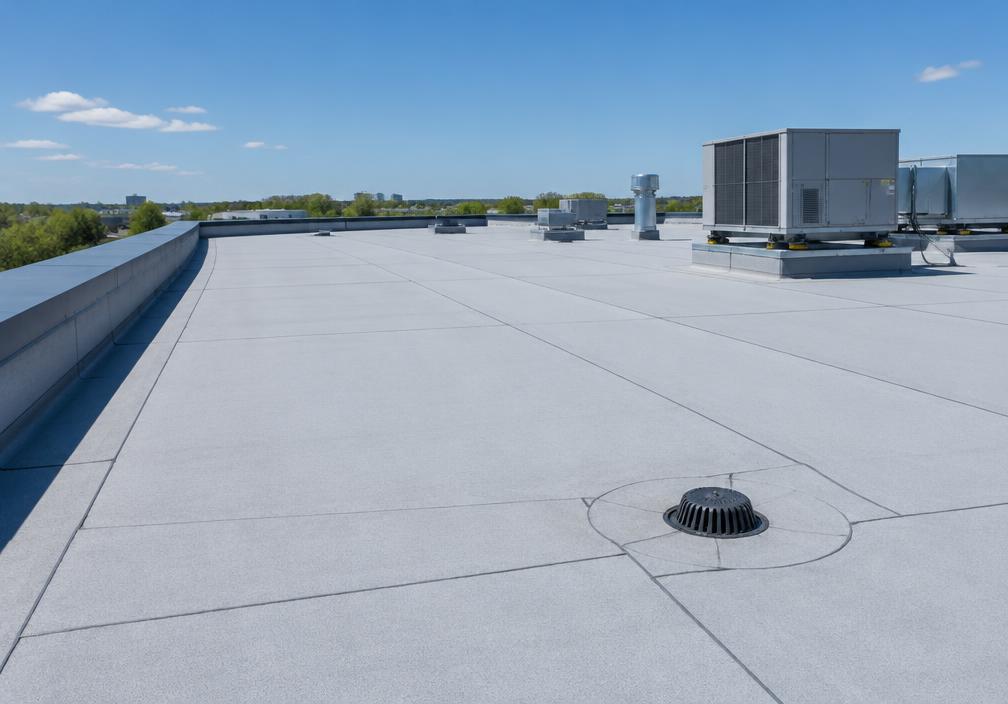
A flat roof still needs a drainage plan
Low-slope roofs depend on a designed path for water to reach drains or scuppers. Drain performance is part of the roofing system, not a separate housekeeping issue. The appropriate layout depends on the building and roof design.
Track persistent standing water
Note where water remains after rainfall and share photographs with a qualified commercial roofer. Persistent ponding can indicate a blocked outlet or a roof slope issue, but a photograph alone is not enough to diagnose the cause. Do not attempt to alter a drain or cut into the membrane.
Coordinate access and maintenance
Arrange safe, authorized access for a professional to check drains, flashing, seams and equipment penetrations. Keep a record of roof visits and ensure other trades understand how to protect the membrane. Equipment servicing can introduce roof damage if access and protection are not planned.
Use the roof’s own maintenance requirements
Follow the manufacturer’s requirements and the building’s maintenance plan. Ask for inspection records that distinguish observations from recommended repairs. Before approving changes, confirm how the proposed work affects the roof system and any existing warranty.
Have a roofing question in Ontario?
Share your observations with Innovative Roofing Systems to discuss the next step for your home or building.
Visit Innovative Roofing Systems