
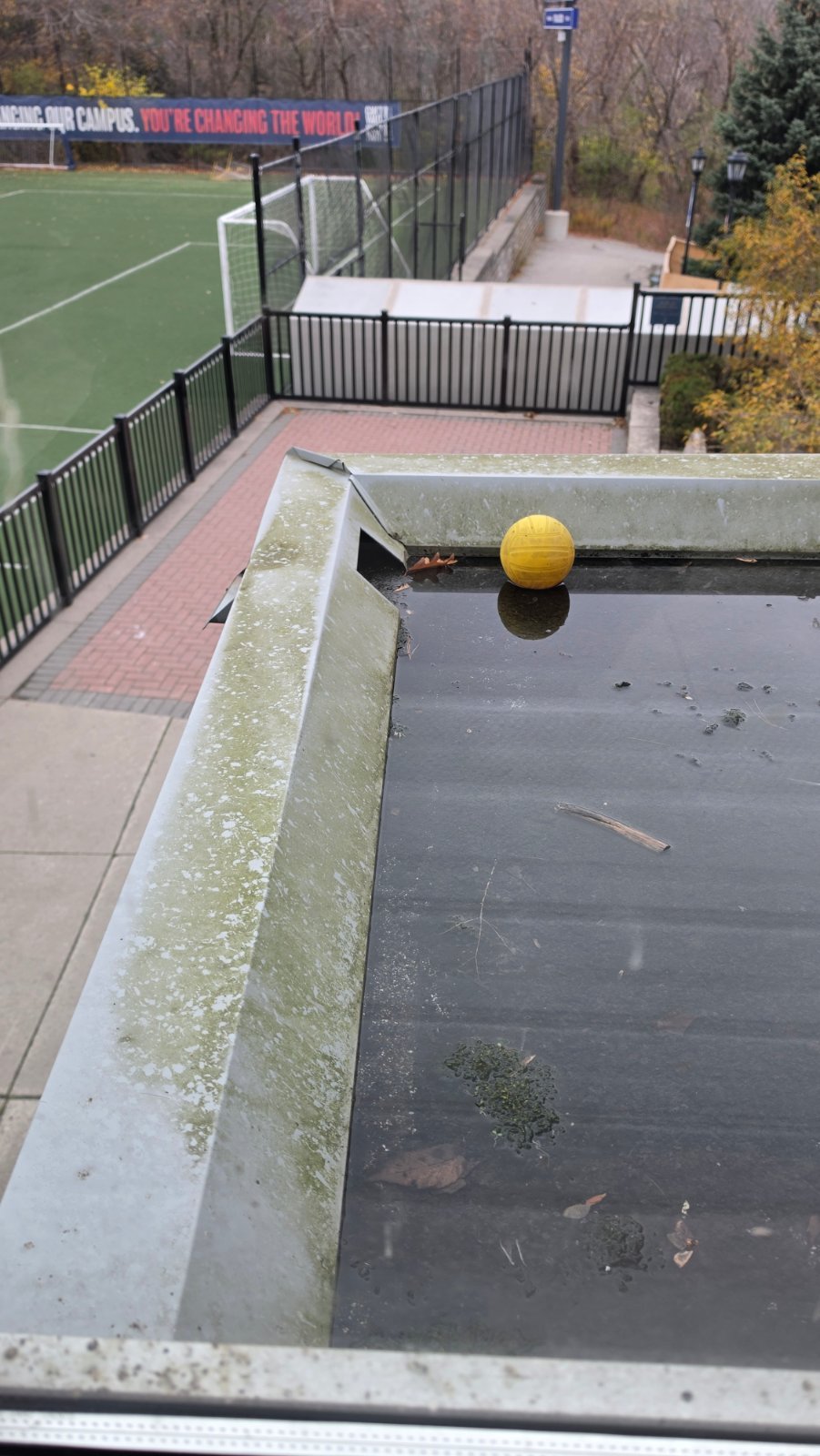
Why is water sitting on your flat roof?
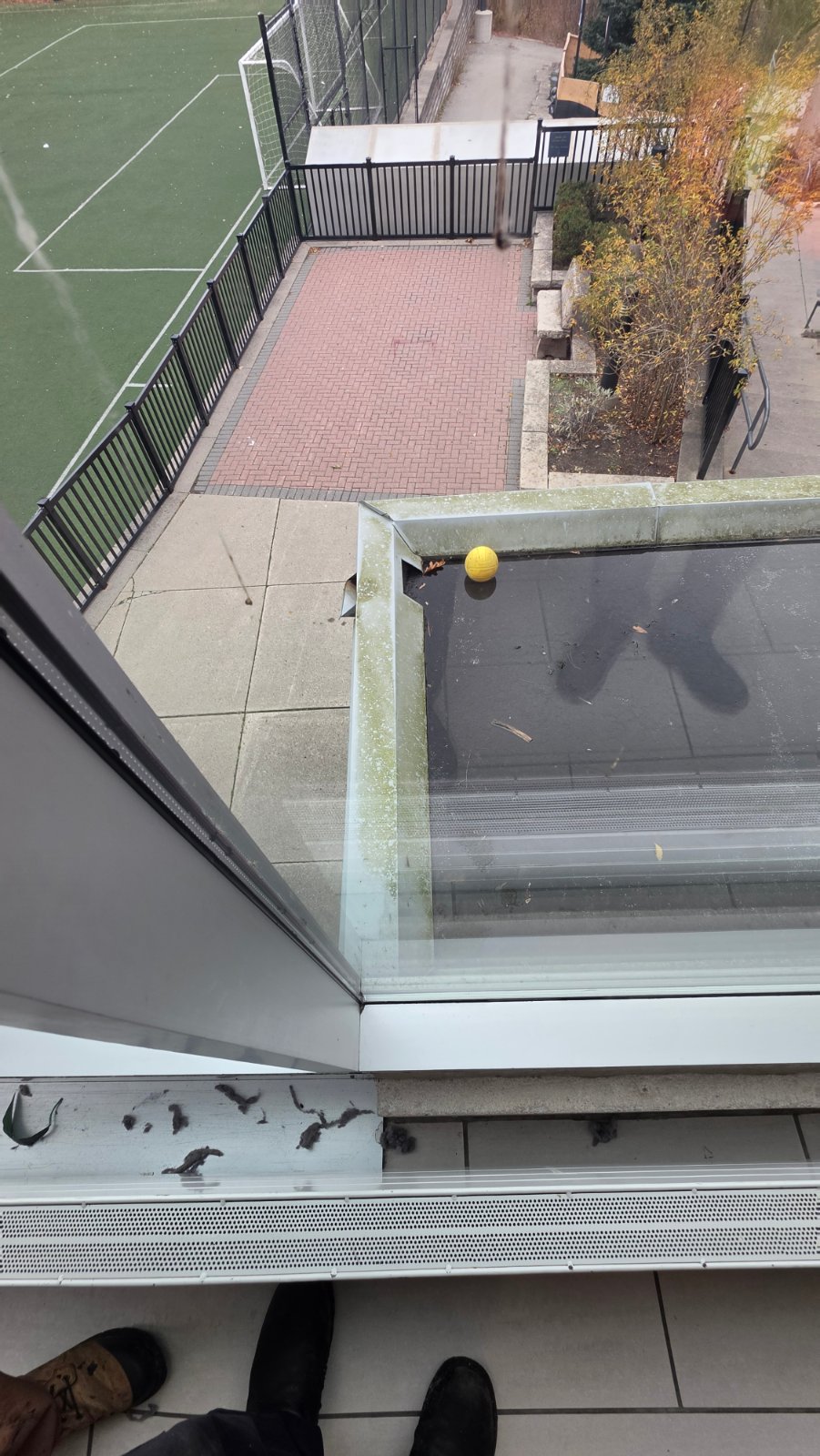
Improper flat roof drainage usually means water cannot reach an outlet, cannot pass through it, or is collecting in a low spot. A little water during rain is not automatically a roof failure. Water that remains well after surrounding surfaces have dried, however, deserves attention. For Greater Toronto Area property owners, the useful first step is an inspection of the drainage route—not simply adding sealant wherever a puddle appears. Flat roofs are common on Toronto additions, garages, apartment buildings and mixed-use properties. Despite the name, they need a slight slope that directs water towards drains, gutters or scuppers—openings through the roof perimeter. When that route stops working, even a relatively small roof can hold water where it was meant to shed it.
What causes poor flat roof drainage?
Debris is one of the first things to check. Leaves, twigs and windblown litter can collect around drain strainers or at narrow outlets. Loose objects can also shift during a storm and obstruct an opening. In the photo, the yellow ball and debris are worth removing safely, but neither should be labelled the cause without seeing the actual drainage arrangement. Sometimes the outlet is clear but water still cannot reach it. A low area in the roof surface, compressed insulation or movement in the underlying structure may interrupt the intended slope. An outlet positioned above the surrounding membrane can also leave a shallow pool behind. These conditions call for measurements and a closer examination, rather than a visual guess from the roof edge. The problem may also be farther along the route. A blocked downspout, restricted leader pipe or poorly draining gutter can slow discharge from the roof. Older additions in neighbourhoods such as The Junction and East York may have roof sections built at different times, so the inspection should establish where each section sends its water and whether adjoining sections share an outlet.
When does standing water become a concern?
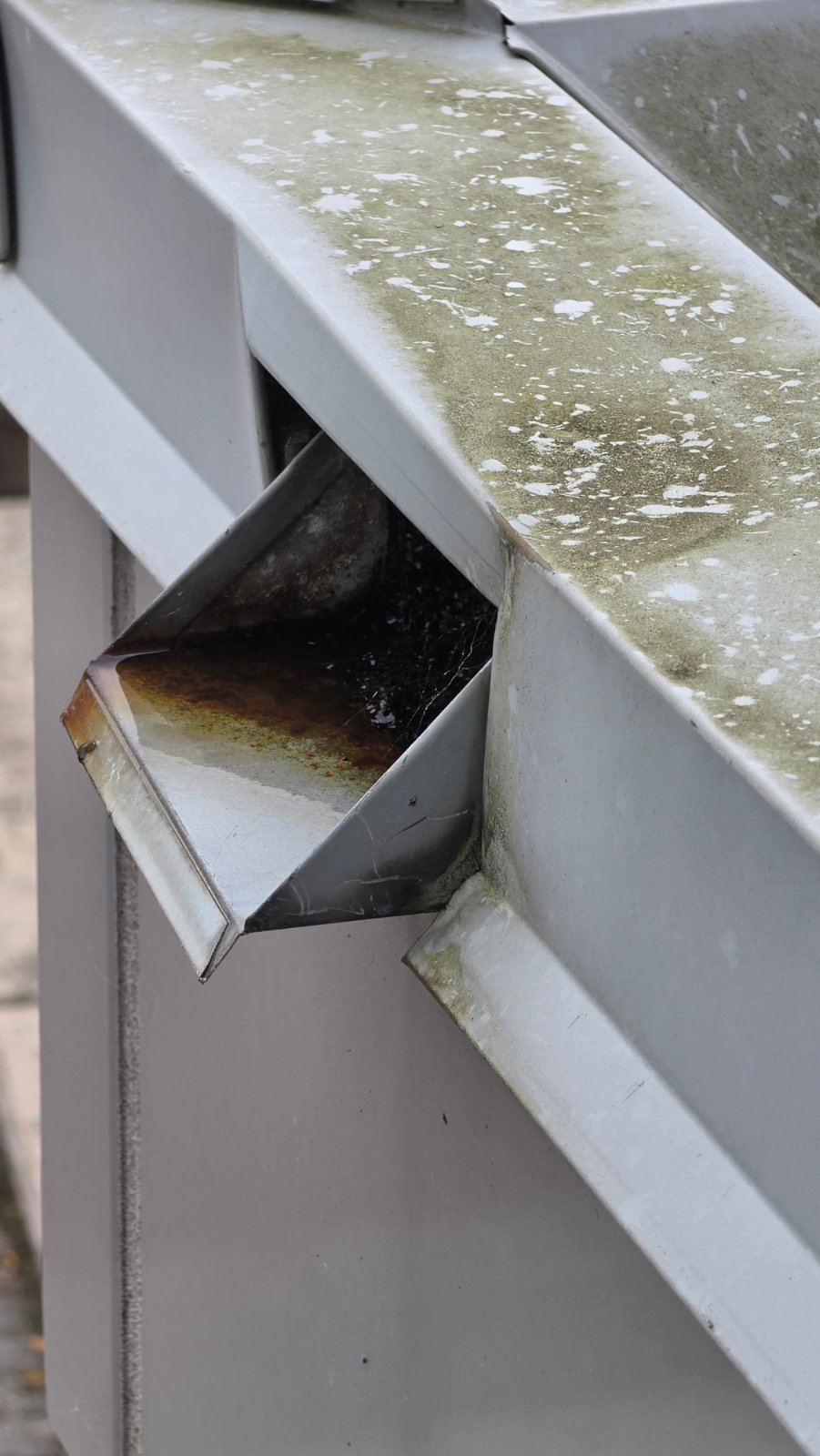
Pay attention to how often water collects, how large the affected area becomes and how long it takes to disappear. Many roofing guidelines use roughly 48 hours after rainfall as a reference for persistent ponding, but the roof system’s requirements and drying conditions matter. Cool, damp weather changes evaporation. You do not need to wait for a particular deadline if water is rising or leaking indoors. Repeated ponding can contribute to deterioration in some roof systems and keep seams, flashings and existing defects exposed to water. It also adds weight; the significance depends on the depth, area and building structure. A puddle alone does not prove structural trouble, but new sagging, rapidly increasing water accumulation or interior ceiling movement warrants prompt professional assessment. Ontario freeze-thaw cycles add another complication. Meltwater can refreeze around outlets, and snow can hide blocked drainage routes. Summer storms bring a different test: heavy rain can reveal restrictions that are less obvious in light showers. If a ceiling bulges or leaks near electrical fixtures, keep people away from the affected area and seek urgent help. Do not puncture a bulging ceiling.
How should drainage problems be checked and repaired?
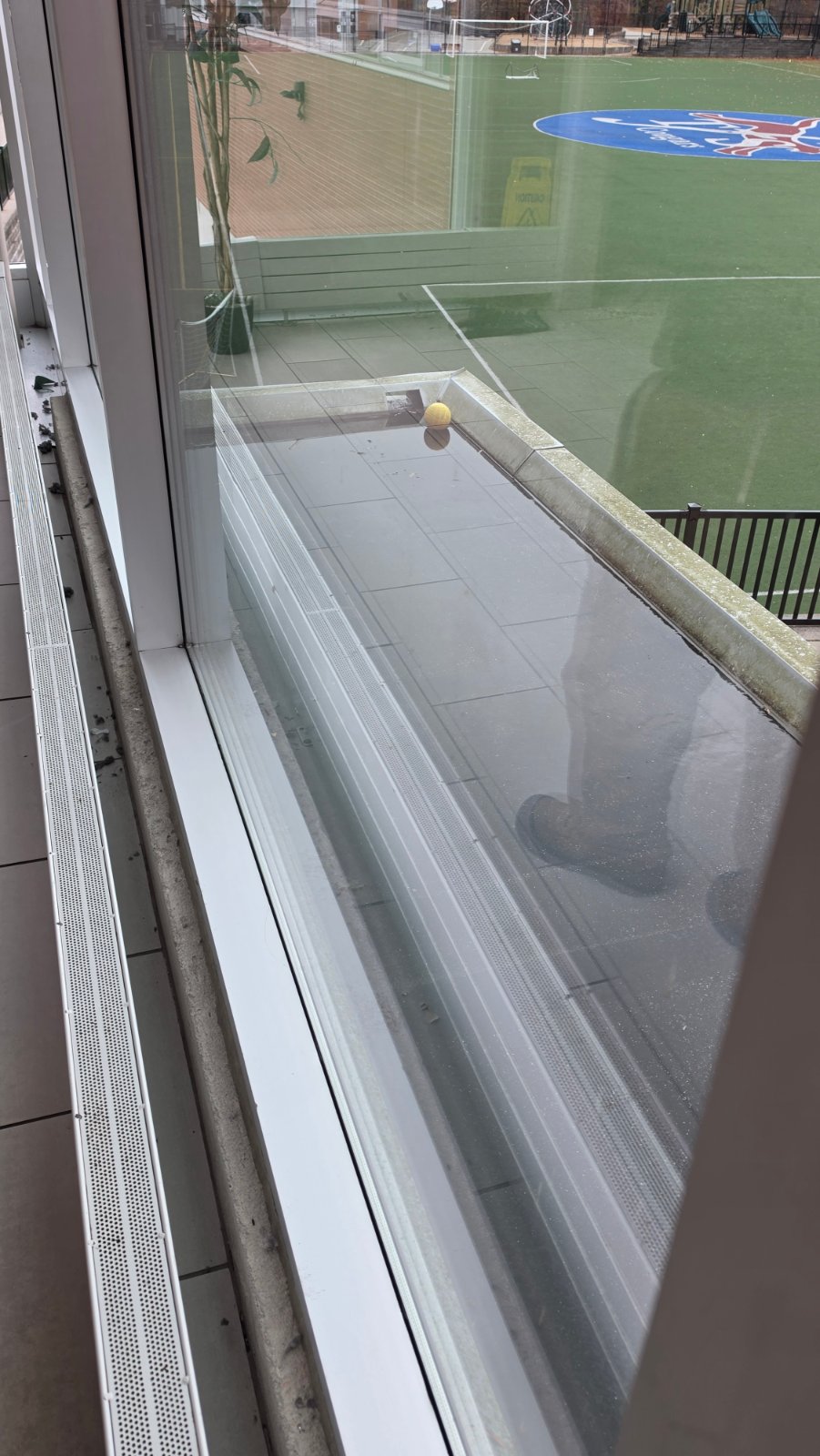
Start with observations you can make safely from the ground or an existing window. Note when it rained, where water remains and whether accessible downspouts appear to discharge during rain. Photograph changes from the same safe viewpoint. Avoid climbing onto a wet or icy roof, leaning out to retrieve debris, or stepping onto a surface whose condition is unknown. A roofing inspection should trace the complete path from the roof surface to the discharge point. That includes the membrane, seams, flashings, drain connections, strainers, scuppers and accessible gutters or downspouts. The metal detail at the corner in the photo appears uneven, but its condition and role cannot be determined from the image. It needs close inspection before anyone concludes that it is defective or involved in the drainage issue. The repair should match the cause. Clearing debris may restore flow where an obstruction is responsible. A faulty drain connection may need a compatible repair; a blockage inside drainage piping may require a plumber. Persistent low spots may call for a designed correction, such as tapered insulation during suitable roof work. Suspected structural movement needs assessment before covering it over. Drilling new openings or applying generic roof coating is not a substitute for that diagnosis. After work is completed, confirm that the route drains as intended. A contractor may observe rainfall or use a controlled drainage check when appropriate—not an improvised flood test. For ongoing maintenance, arrange checks in spring and after autumn leaf fall, with additional attention after major storms. Tree-lined properties in Scarborough, Mississauga and elsewhere across the GTA may need debris checks more often.
Frequently asked questions
Does standing water mean I need a new roof? No. An obstruction or local detail may be repairable without replacing the roof. The decision depends on membrane condition, the drainage layout and whether moisture has entered the roof assembly. Persistent ponding should be investigated before choosing either a repair or replacement. Can I push the water towards the drain myself? Avoid walking onto the roof or dragging tools across the membrane. You could damage the surface or fall, especially where water hides slippery debris. Moving the puddle also does not correct its cause. Have a qualified contractor assess safe access and restore drainage. Will clearing the leaves prevent the problem from returning? It may help if debris is restricting flow, but it will not correct a low spot or an outlet set too high. Ask for a follow-up check after rainfall. Keep strainers and protective components in place; removing them can allow debris into the piping.
Book a flat roof inspection with Innovative Roofing Systems
If water repeatedly remains on your roof, an inspection can help distinguish a maintenance issue from a problem with slope, outlets or roof condition. Innovative Roofing Systems can assess your GTA property and explain the findings in plain language, so you can understand what needs attention and what the next practical step should be. When you get in touch, share any safely taken photos, the approximate timing of the last rainfall and whether you have noticed interior staining or leaks. There is no need to get onto the roof yourself. A useful assessment starts with those observations and leads to recommendations based on the roof—not assumptions from a photograph.
Have a roofing question in Ontario?
Share your observations with Innovative Roofing Systems to discuss the next step for your home or building.
Visit Innovative Roofing Systems