
Can ice dams cause serious damage on a flat roof?
Yes. Ice dams can block a flat roof’s drainage, trapping meltwater where it can leak through damaged seams, flashings or other weak points. Flat roof ice dam removal is about restoring drainage without damaging the waterproofing underneath—not simply breaking up visible ice. For Greater Toronto Area property owners, the safest starting point is to call Innovative roofing systems to have it removed safely. A frozen roof does not automatically mean a failed roof. The concern is what happens when snow melts and water cannot escape. Identifying that drainage problem early can help prevent a manageable maintenance issue from becoming extensive roof and interior repairs.
Why does ice build up on flat roofs in the GTA?
Most flat roofs have a slight slope that directs water towards internal drains, edge outlets called scuppers, or gutters. Ice can interfere with any of these routes. When meltwater reaches a colder drain or perimeter area and refreezes, it can create a barrier. More water then collects behind it and may freeze into a wider sheet. Ontario’s freeze-thaw cycles make this especially troublesome. Sunshine or milder daytime temperatures can melt snow, followed by an overnight freeze. Heat escaping from the building can also contribute, although ice alone does not prove an insulation problem. Leaves, debris, drainage defects and low spots may be part of the picture too. Across Toronto, Scarborough and Etobicoke, flat and low-slope roofs are found on older additions, mixed-use buildings and newer homes. Their drainage arrangements vary. A roof draining through a parapet wall needs a different assessment from one with internal drains. That is why finding the actual water route matters more than applying a one-size-fits-all winter treatment.
What damage can trapped water and ice cause?
Standing meltwater can expose weaknesses around membrane seams, roof penetrations and flashing transitions. If water gets below the waterproof layer, it may soak insulation and reach the roof deck. Wet insulation can lose effectiveness, while prolonged moisture exposure can deteriorate vulnerable materials. Repeated freezing can worsen some existing openings and defects. Inside, the first clue may be a ceiling stain, bubbling paint or dampness near an exterior wall. The entry point is not necessarily directly above the stain: water can travel through a roof assembly before becoming visible. Persistent moisture can also damage finishes and support mould growth. Clearing the ice does not repair those underlying problems or dry saturated materials. Snow, ice and retained water also add weight. Whether that load threatens the structure depends on the building and conditions; a photo cannot answer that question. New sagging, cracking or unusual structural noises need urgent professional attention. Keep people out of affected areas, and contact emergency services if collapse appears possible. Never climb onto a roof to investigate suspected structural distress.
How should flat roof ice dam removal be handled safely?
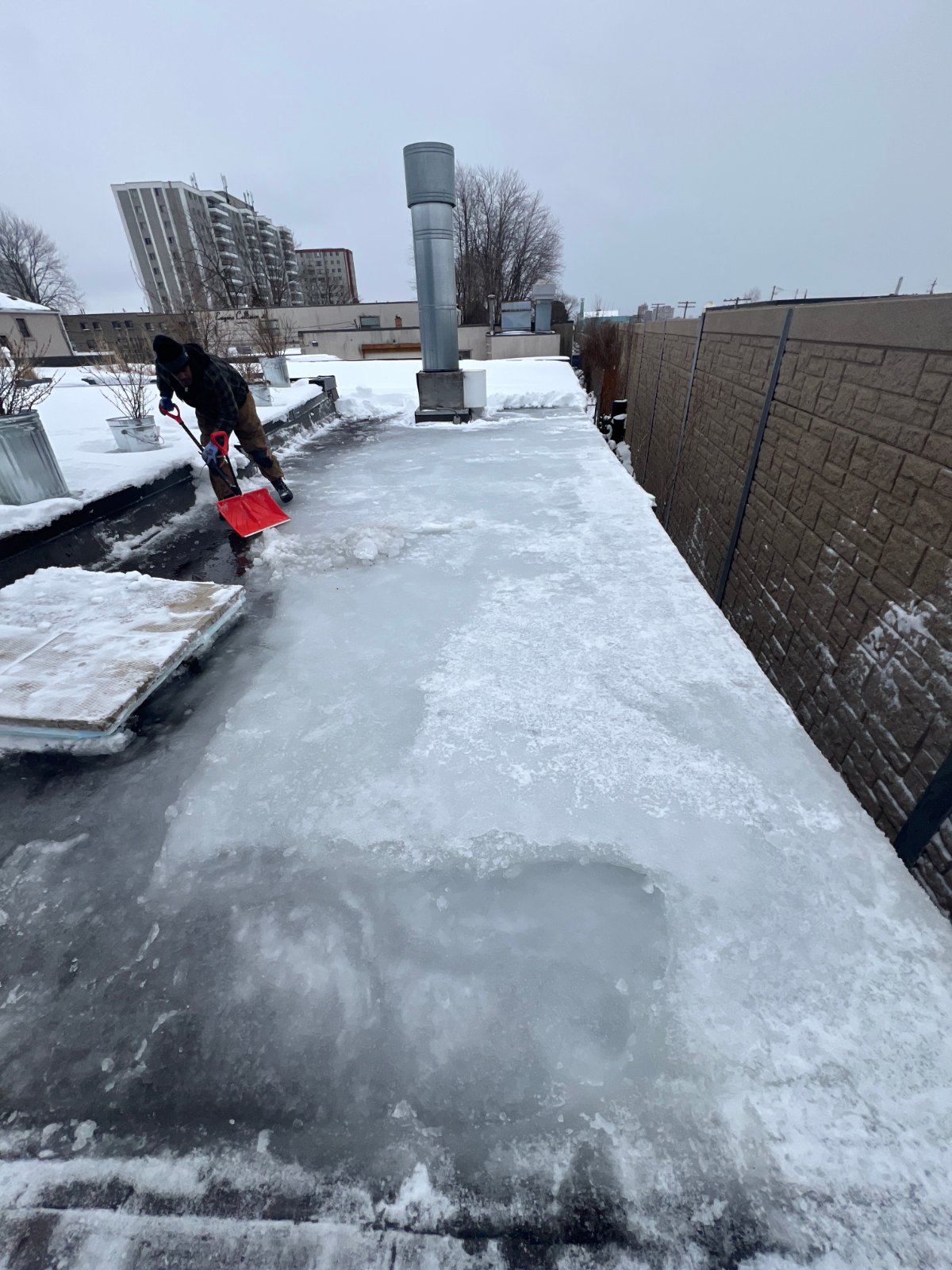
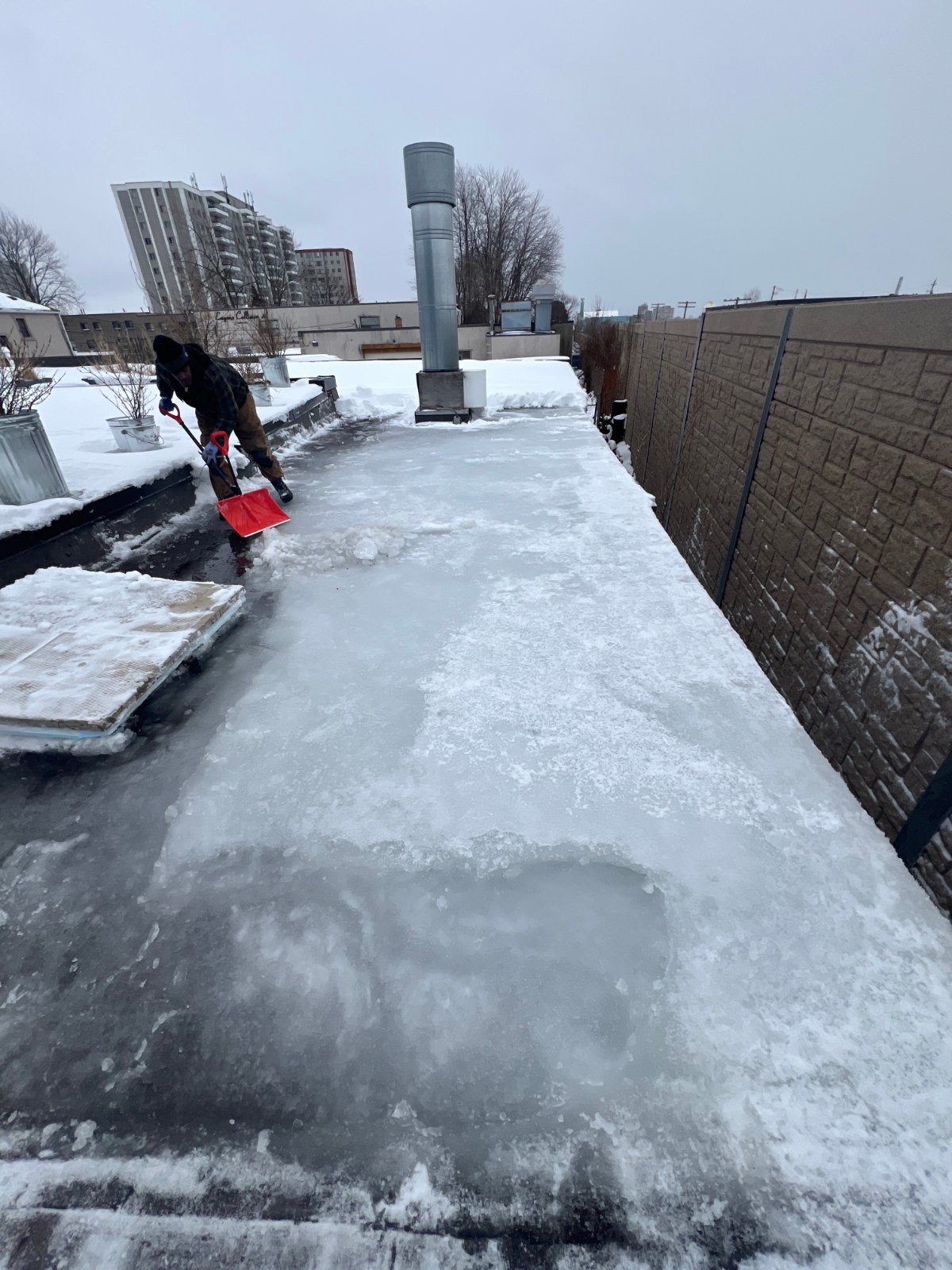
A safe removal plan starts with access, fall protection, roof condition and drainage—not force. Ask Innovative Roofing Systems to assess the buildup and explain a suitable approach for your roof. The assessment should identify the roof covering, drain locations, vulnerable details and where released water will go. Weather conditions and possible loading concerns also affect whether work can proceed safely. Where appropriate, trained roofers can carefully reduce loose snow using tools and techniques that protect the membrane. Bonded ice requires particular caution. Hammers, picks, sharp shovel edges and aggressive scraping can puncture or tear roofing, especially when cold materials are less flexible. The shovel visible in the photo does not establish which technique was used or whether it suits another roof. Professional low-pressure steam equipment may be an option for some ice-removal situations, but its suitability must be checked against the roof system and site conditions. Do not assume every contractor offers it or every roof needs it. Avoid open flames, uncontrolled hot-water application and unapproved de-icing chemicals. The goal is controlled drainage relief, followed by inspection—not a perfectly bare roof at any cost.
What should you do now, and how can you prevent a repeat?
Stay off an icy roof and record what you can safely observe from indoors or the ground. Note when leaks occur, whether they follow a thaw, and which rooms are affected. Move belongings away from drips if safe. Keep clear of bulging ceilings and water near electrical fittings; electrical hazards need qualified help, not a bucket placed underneath them. Once access is safe, a roofer should check drains, scuppers, flashings and exposed membrane areas. Ice may conceal damage, so a follow-up after thawing can be necessary. If water has entered the roof assembly, further investigation may be needed to establish whether insulation or decking requires repair. Do not assume that a leak stopping means the roof is sound. For prevention, arrange seasonal drainage checks, particularly after autumn leaf fall, and inspections after damaging storms. Recurring pooling may call for drainage or slope improvements. Suspected heat loss deserves assessment of insulation and air leakage, with ventilation considered where appropriate to the roof assembly. Heat tracing is not a universal fix; it needs suitable design and installation.
Frequently asked questions
Can I put sidewalk salt on my flat roof? Avoid it unless the roofing manufacturer specifically approves the product and application. De-icers can affect roof components and create runoff concerns without correcting the drainage problem. Will ice removal stop an active leak? It may reduce backed-up water, but it will not repair damaged seams, flashings or wet insulation. The roof still needs assessment once the affected area is accessible. Should every patch of roof ice be removed? Not necessarily. Priorities depend on drainage, loading concerns and roof condition. Trying to remove every bonded patch can cause more harm than leaving some ice to thaw under professional guidance.
Arrange a flat roof inspection with Innovative Roofing Systems
If your GTA property has recurring roof ice, a new ceiling stain or suspected blocked drainage, contact Innovative Roofing Systems to discuss an inspection. Share photographs taken from a safe location, the timing of any leaks and what you know about the roof’s age or previous repairs. These details help focus the assessment. Ask what needs attention now, which removal methods are suitable, and what should be checked after the thaw. A useful plan separates immediate drainage relief from lasting repairs. You do not need to diagnose the roof yourself—just take the warning signs seriously and get clear advice before attempting removal.
Have a roofing question in Ontario?
Share your observations with Innovative Roofing Systems to discuss the next step for your home or building.
Visit Innovative Roofing Systems