
What causes ice dams on Vaughan roofs?
Ice dam prevention in Vaughan starts with keeping heat inside your home and allowing melting snow to drain off your roof. An ice dam forms when meltwater freezes at a colder roof edge, creating a barrier that can trap water behind it. That water may work beneath shingles and enter the house. If you already see a heavy ice ridge or an indoor leak, focus on safe assessment—not climbing up to break the ice yourself. A common starting point is warm indoor air escaping into the attic through gaps around access hatches, wiring and other openings. Heat warms the roof deck, snow melts above the heated part of the house, and runoff refreezes at the colder overhang. Sunlight and changing outdoor temperatures can also contribute. Ontario freeze-thaw cycles give this process repeated chances to build up ice. Across Woodbridge, Maple and Kleinburg, roof layouts vary from relatively simple slopes to intersecting roofs with valleys and lower sections. These intersections can concentrate snow and runoff. The practical question is not just whether the eavestrough is frozen: it is where the water comes from, where it freezes, and whether it has a safe route off the roof.
What does the snow and ice in this photo tell us?
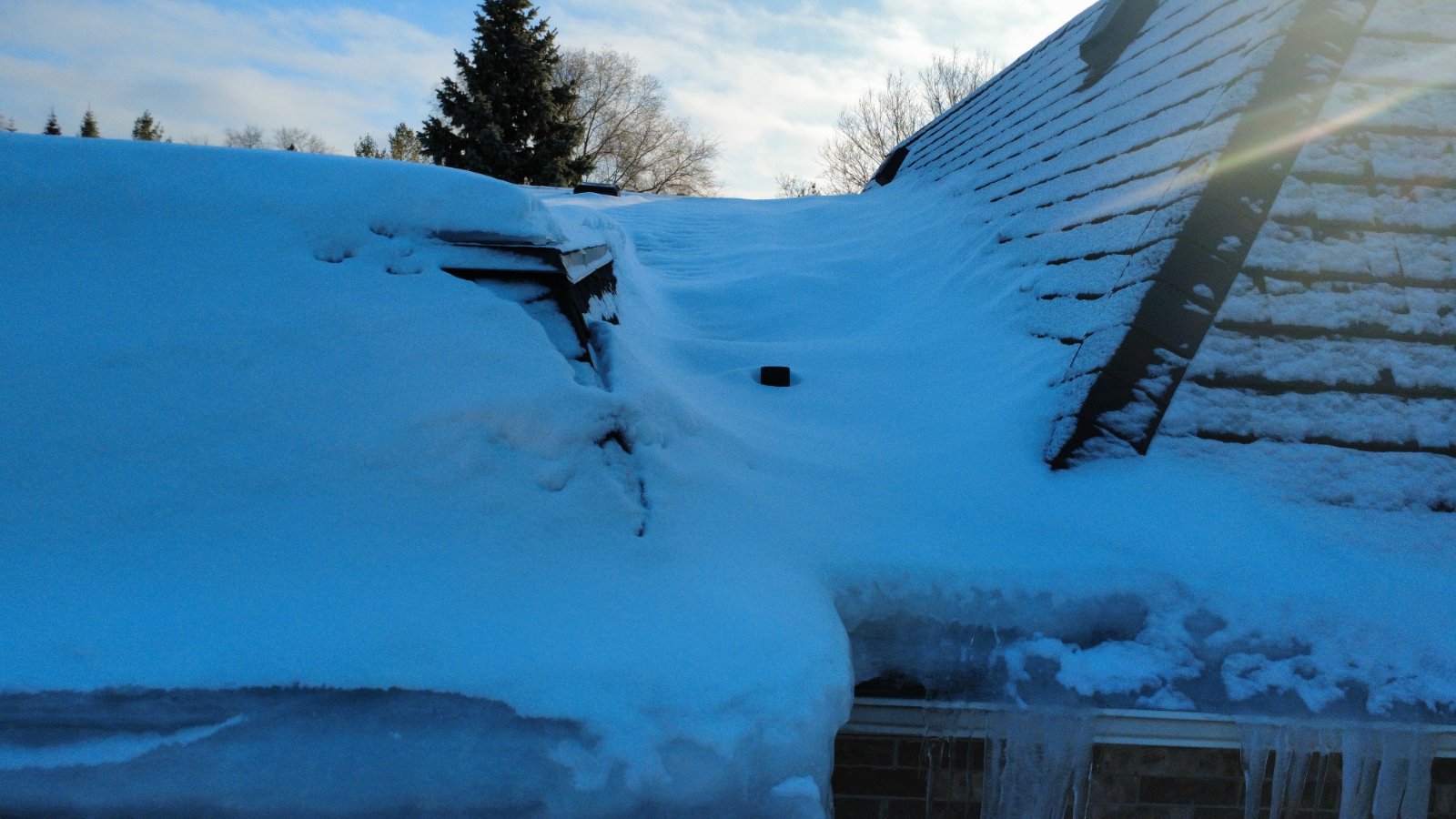
The supplied photo shows dark shingles, intersecting roof slopes and a band of snow following a roof valley. Near the lower edge, what appears to be thicker ice spreads towards the white eavestrough. This is a useful example of a location worth watching because valleys collect runoff from adjoining slopes and direct it into a smaller area. The image alone cannot confirm an active ice dam, a leak or the condition of the materials beneath the shingles. It also cannot tell us whether attic heat, sunshine, drainage restrictions or several factors together caused the visible buildup. Exposed shingles beside remaining snow are not, by themselves, proof of poor insulation. For a roof with this pattern, an inspection would look at the valley outlet, the adjoining roof edge and the drainage path. Inside, any matching ceiling stains or attic moisture would help narrow the investigation. Photos taken safely from the ground over several days can also show whether the same spot repeatedly freezes as the surrounding snow melts.
What warning signs need prompt attention?
Look from the ground for a raised band of ice along the eaves, ice collecting at valley outlets, or water spilling over an eavestrough during a thaw. Icicles are a reason to pay attention, but they do not automatically mean water is entering the home. Avoid standing beneath them, and keep walkways away from areas where ice could fall. Indoors, watch for new ceiling stains near exterior walls, damp window trim, peeling paint or dripping that appears during a thaw. These symptoms can have other causes, including condensation or flashing problems, so their timing matters. Note when the moisture appears and whether it follows sunshine, rain on snow or a rise in temperature. If water is actively entering, arrange a prompt roofing assessment. Move belongings out of the affected area and collect drips only where it is safe. Stay clear of bulging ceilings and wet electrical fixtures; water near electrical equipment requires appropriate professional help. Do not enter a cramped or unfamiliar attic to trace a leak while conditions are unsafe.
How can you handle ice dam prevention in Vaughan safely?
For existing buildup, leave roof access and ice removal to a qualified professional equipped for winter conditions. Ask how the ice will be removed without damaging shingles, flashing or eavestroughs. Controlled steam removal may be appropriate in some situations, but the method should suit the roof and site conditions. Chopping with tools, using an open flame or pouring boiling water onto a frozen roof can create damage and serious hazards. A roof rake may help reduce fresh snow near a reachable eave when used from stable ground, following the manufacturer's instructions. It is not a tool for prying off bonded ice. Keep clear of overhead wires and falling snow, and stop if the work requires a ladder, forceful scraping or reaching beneath a heavy ice overhang. Steep roofs, tall houses and tight side yards often make professional help the safer choice. Longer-term prevention usually starts with the attic. An assessment should check for air leaks from the living space, insulation gaps, blocked soffit airflow and bathroom exhaust ducts that discharge into the attic rather than outdoors. Air sealing, appropriate insulation and a ventilation arrangement suited to the roof work together. Adding more vents alone will not correct uncontrolled heat loss, and insulation must not block intended ventilation paths. Drainage and roof details matter too. Have debris cleared from eavestroughs and downspouts before winter, and damaged shingles or flashing assessed after summer storms. Clean gutters support drainage but cannot guarantee an ice-free roof. When reroofing, discuss protective membrane details at vulnerable eaves and valleys. These provide backup protection against water entry; they do not stop snow from melting and refreezing. Heat cables also need a roof-specific assessment rather than being treated as a universal fix.
Frequently asked questions
Does an ice dam mean I need a new roof? Not necessarily. The main issue may be heat escaping into the attic, restricted drainage or a vulnerable roof detail. An inspection can help separate repair needs from underlying prevention work. Can I put driveway salt on the roof? Avoid using driveway de-icers on roofing or in eavestroughs without professional guidance. Products can affect metals, surrounding finishes and landscaping, and they do not address the reason the ice keeps forming. Will the problem disappear when the weather warms up? The ice may melt, but hidden moisture or damaged materials can remain. If you noticed leaking or staining, have the affected area checked even after the roof looks clear. Repeated buildup in the same location also deserves investigation.
Arrange a roof inspection without the guesswork
If ice keeps building up along your Vaughan roof, an inspection is a sensible next step. Innovative Roofing Systems can assess the roof and discuss whether immediate attention, follow-up repairs or further attic evaluation would be appropriate. Winter access depends on conditions, and some details may need another look once snow and ice have cleared. When you get in touch, share ground-level photos, the location of any indoor staining and when you first noticed the issue. Those details help focus the assessment. Whether your concern is a valley like the one pictured or a recurring ridge along the eaves, the goal is straightforward: understand the cause and choose practical work that helps protect your home.
Have a roofing question in Ontario?
Share your observations with Innovative Roofing Systems to discuss the next step for your home or building.
Visit Innovative Roofing Systems